Naples • Estero • Fort Myers
Therapy & Counseling Services in Naples, Estero & Fort Myers
The therapy approaches we offer at our three Southwest Florida offices, and how to find the one that fits what you're working on.
Choosing the Right Service
Most people don't arrive saying "I need cognitive behavioral therapy for generalized anxiety disorder." They arrive saying "I can't sleep," or "we keep having the same fight," or "something happened a long time ago and I can't seem to put it down." Whether what's going on has a clinical name -- GAD, panic disorder, social anxiety, OCD, PTSD -- or doesn't, here's how the everyday version of these concerns maps to the work we offer.
If you're stuck in your own head right now
Thoughts that won't slow down, decisions that feel impossible, dread you can't trace to anything specific. Start with anxiety therapy, depression counseling, or stress management. The approaches we tend to use for this kind of work are CBT, mindfulness-based therapy, and ACT.
If something happened that you can't shake
Events you keep replaying, reactions that don't fit the situation in front of you, sleep that hasn't been right since whatever it was. Read about trauma and PTSD treatment and EMDR therapy (Eye Movement Desensitization and Reprocessing). Both are designed for memories and experiences that the brain hasn't fully processed.
If family dynamics are the thing
Parents and adolescents who can't seem to talk without it turning into a fight, siblings working through a parent's illness or estate, blended-family adjustment, or extended-family dynamics that keep spilling into everything else. Family therapy works with two or more family members in the room to change the patterns rather than just talk about them.
If you're going through a major change
Retirement, divorce, an empty nest, a move to Florida, a death in the family, a serious diagnosis. Life transitions work focuses on adjusting to who you are after. Grief counseling is more specifically for loss and the longer arc of moving through it.
If your child or teenager needs support
Child and adolescent therapy works with school-age kids and teens, using adapted CBT, family involvement when it helps, and a slower pace than adult work. For younger kids, play therapy lets children process what they're working through with sand, art, and role-play -- the way kids actually make sense of their world.
If something more specific applies
We also offer ADHD therapy, OCD treatment using ERP, bipolar disorder therapy alongside your psychiatric care, anger management, substance abuse counseling, LGBTQ-affirming therapy, and therapy in Spanish.
If you've worked with a particular approach before
And you know what helped, you can read about CBT, DBT, ACT, EMDR, and mindfulness therapy directly. Most clients don't shop by approach, but if you have one in mind, your therapist can build on what's worked for you in the past.
Browse All Services
Everything we offer, grouped by what most people are looking for when they land here.
Mental Health Concerns
These are the specific concerns clients most often come in for. If you can't quite name what's going on, anxiety and depression are the most common starting points -- a good therapist will help you sort out what's actually driving the picture.
Family Work
Two or more family members in the room, longer sessions, a different rhythm. We do this work in person at all three offices and by telehealth, depending on what works for everyone involved.
Therapy Approaches We Use
These pages explain the methods our clinicians draw on. Most people don't pick a service by approach, but if you've heard about one or worked with it before, this is where to read more.
Specialized Populations & Access
Therapy that's tailored to who you are or how you need to access care. Includes work with children and teenagers, identity-affirming care, bilingual sessions in Spanish, and telehealth anywhere in Florida.
How We Approach Therapy
Therapy isn't one-size-fits-all, and we don't try to make it that. Before we settle on a direction, we spend the first session or two understanding what you're actually dealing with -- the situation that brought you in and the patterns you keep running into. The first session is conversational, not a clinical interrogation. By the end, you and your therapist should have a working sense of where to start and why.
Our clinicians draw from multiple evidence-based approaches rather than committing to one school. Most of us are trained in some combination of cognitive behavioral therapy, EMDR, acceptance and commitment therapy, dialectical behavior therapy, mindfulness-based work, and trauma-focused methods. Which approach we lean on -- or how we combine them -- depends on what you're working through and how you respond to the work as we go. Plans aren't fixed. If something isn't moving, we change it.
What we offer is talk therapy and related counseling methods. We don't prescribe medication. If medication might be part of what you need, we'll suggest psychiatrists or primary care doctors we trust, and coordinate with them while you do the therapy work with us. Sessions happen at our Naples, Estero, or Fort Myers offices, or by telehealth across Florida -- whichever makes it easier to keep showing up. Showing up is most of it.
Our Team of 16 Therapists
Florida Coast Counseling has 16 licensed and registered therapists working across our Naples, Estero, and Fort Myers offices. The breadth matters: it means you're more likely to find a clinician whose specific training -- whether that's EMDR for trauma, ERP for OCD, play therapy for younger children, or bilingual sessions in Spanish -- actually matches what you need. Everyone on the team is licensed or registered with the Florida Department of Health.

Rebecca Anderson, PhD
Licensed Psychologist & Co-Owner
Naples · Estero

Christy Barbale, MA, LMHC
Licensed Mental Health Counselor & Co-Owner
Naples

Chelsea Birmingham, MSAP, LMHC
Licensed Mental Health Counselor
Naples

Angelina Papazova, MS, CRC, LMHC
Licensed Mental Health Counselor
Naples

Shivani Patel, M.Ed. & Ed.S., RMFTI
Registered Marriage and Family Therapy Intern
Estero · Fort Myers

Emily Korolevich, MS, LMFT
Licensed Marriage and Family Therapist
Naples

Izzah Zainab, MA, RMHCI
Registered Mental Health Counselor Intern
Naples

Mary Lisa Grimmer, MA, LMHC
Licensed Mental Health Counselor
Estero · Fort Myers
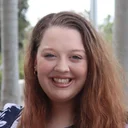
Skyler Moore, MA, RMHCI
Registered Mental Health Counselor Intern
Naples · Estero · Fort Myers

Micki Besse, MS, MA, RMHCI
Registered Mental Health Counselor Intern
Estero

Stephanie House, MS, LMHC
Licensed Mental Health Counselor
Naples

Stephen Bridges, MSW, RCSWI
Registered Clinical Social Worker Intern
Estero · Fort Myers

Brianna Drinnon, MSW, LCSW
Licensed Clinical Social Worker
Estero

Kim Slote, MSW, RCSWI, JD
Registered Clinical Social Worker Intern
Naples

Camelia Francisc, MS, LMHC
Licensed Mental Health Counselor
Fort Myers

Leigh Williamson, MA, RMHCI
Registered Mental Health Counselor Intern
Estero · Fort Myers
The practice is co-owned by Rebecca Anderson, PhD, a licensed psychologist, and Christy Barbale, MA, LMHC, a licensed mental health counselor. They founded Florida Coast Counseling and continue to see clients alongside running it. Both also supervise our registered interns, which means every intern's clinical work is reviewed weekly by a fully licensed clinician.
We hire across experience levels intentionally -- a registered intern with the right specialty and the right supervision is often a better fit for a particular client than the most senior clinician on staff, especially for younger clients or for specific modalities like EMDR or play therapy. Match matters more than seniority.
You can filter our team by location and specialty, or read more about how the practice came together.
Three Offices in Southwest Florida
We see clients in person at three offices across Lee and Collier Counties. Each location has its own character -- shaped by who lives nearby, the kinds of concerns we hear most often, and the practical things like which insurance networks are common in that area.
Naples
Our Naples office on Pine Ridge Road is our original location and serves clients across Naples, North Naples, Marco Island, and the surrounding Collier County communities. A meaningful share of our Naples clients are working through retirement transitions, the seasonal rhythm of splitting time between Florida and somewhere up north, or the relational work that comes up later in life -- long marriages, adult-children dynamics, empty-nest adjustment.
Estero
The Estero office at Estero Park Commons sits between Naples and Fort Myers and tends to draw clients from Bonita Springs, Estero, San Carlos Park, and the FGCU/Coconut Point corridor. The mix here skews younger and more family-oriented -- working parents, college-age clients, and families navigating change together.
Fort Myers
Our Fort Myers office on Matthew Drive serves Fort Myers, Cape Coral, Lehigh Acres, Fort Myers Beach, and the broader Lee County area. Demand here grew significantly after Hurricane Ian -- many clients are still working through storm-related trauma, displacement, and the cumulative wear of rebuilding. This is also the office that accepts Care Partners through Lee Health, the local network that's especially common for Lee County residents.
Telehealth
If none of the offices are convenient, or you'd rather meet from home, telehealth is available throughout Florida. Most insurance plans cover virtual sessions at the same rate as in-person appointments.
Have a sense of what you're looking for? Reach out at (239) 427-1833 or send us a message and we'll match you with a therapist who fits.
Common Questions About Therapy
How do I know which type of therapy is right for me?
It depends on what you're experiencing. For anxious thoughts and negative thinking patterns, CBT is often a great fit. If you've been through a traumatic experience, EMDR or trauma-focused therapy may help you process it more effectively. During your first session, your therapist will talk through what you're dealing with and recommend an approach that makes sense for you. Many of our clients benefit from a combination of techniques.
What's the difference between a therapist, a counselor, and a psychologist?
In Florida, Licensed Mental Health Counselors (LMHCs), Licensed Marriage and Family Therapists (LMFTs), and Licensed Psychologists all provide talk therapy. The main differences are in their training and scope. Psychologists complete doctoral-level training and can administer psychological testing. Our team includes licensed professionals across these disciplines, so we can match you with the right level of care.
Do you offer therapy in Spanish?
Yes. Emily Korolevich, MS, LMFT provides therapy in both Spanish and English, in person at our Naples office and by telehealth anywhere in Florida. Being able to express yourself in your first language can make a meaningful difference in therapy, and we want that option available to anyone who needs it.
How long does therapy typically take?
There's no fixed timeline — it depends on what you're working through. Some clients see progress in 8 to 12 sessions, while others benefit from longer-term support. We'll check in regularly on how you're feeling and adjust as needed. You're never locked into a set number of sessions.
Can I do therapy online instead of coming to the office?
Yes. We offer telehealth appointments for anyone located in the state of Florida. Video sessions are just as effective for most concerns, and many of our clients prefer the flexibility of meeting from home or their office.
What insurance do you accept?
We accept Aetna, Blue Cross Blue Shield, Cigna, Medicare Part B, United Healthcare, and Care Partners through Lee Health. If you're unsure whether your plan covers therapy with us, call our office at (239) 427-1833 and we'll check for you.
What should I expect at my first appointment?
Your first session is about getting to know each other. Your therapist will ask about what brought you in, your background, and what you're hoping to get out of therapy. It's a conversation, not an evaluation — there's no pressure to share more than you're comfortable with. By the end, you'll have a sense of whether it feels like a good fit.
Do you work with children and teenagers?
Yes. Several of our therapists specialize in working with children and adolescents, using age-appropriate approaches like play therapy, sand tray therapy, art therapy, and adapted CBT. We offer dedicated play therapy for children ages 3-12 and work with kids and teens on anxiety, behavioral challenges, school difficulties, family transitions, and more.
Ready to Talk?
We'd love to hear from you. Reach out to schedule a conversation with one of our therapists.
Accepting most insurance plans • Telehealth available • Evening and weekend appointments