Cognitive Behavioral Therapy (CBT) in Southwest Florida
Your thoughts shape your feelings, and your feelings shape your life. CBT helps you recognize unhelpful patterns and build new ones that actually work for you.
What Unhelpful Thinking Patterns Look Like
Have you ever noticed that the way you think about a situation can make it feel ten times worse? Maybe you got a vague text from your boss and immediately assumed you were in trouble. Or you made one small mistake and spent the rest of the day convinced you are a failure. Perhaps you avoid social situations because you are certain people are judging you, even when there is no evidence of that.
These are the kinds of thinking patterns that CBT addresses. They are called cognitive distortions, and everyone has them to some degree. But when they start running the show -- when catastrophizing, black-and-white thinking, mind reading, or self-blame become your default setting -- they can fuel anxiety, depression, anger, and a whole range of struggles.
The tricky part is that these patterns often feel completely true in the moment. "I am going to fail" does not feel like a thought. It feels like a fact. "Nobody likes me" does not feel like a distortion. It feels like reality. That is what makes them so powerful -- and why having a structured way to examine them can be so freeing.
If you find yourself stuck in loops of negative thinking, if your inner critic is louder than your inner cheerleader, or if worry and self-doubt are holding you back from the life you want, CBT can help you break free from those patterns.
Our Treatment Approach
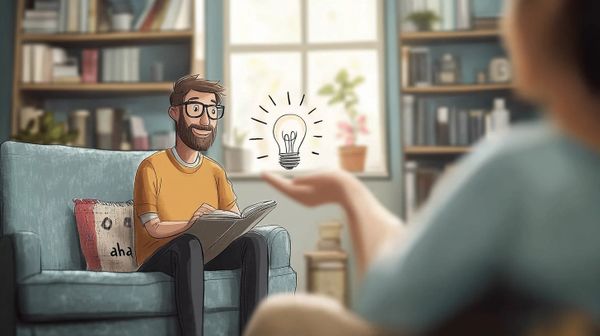
Cognitive Behavioral Therapy is one of the most widely researched and effective forms of psychotherapy. It is built on a straightforward idea: the way we think affects the way we feel, and the way we feel affects the way we behave. By changing unhelpful thoughts and behaviors, we can change how we feel.
At Florida Coast Counseling, our CBT-trained therapists work with you to identify the specific thoughts and beliefs that are causing distress. This is not about "thinking positive" or pretending problems do not exist. It is about learning to see your thoughts more clearly, evaluate them honestly, and respond to situations in ways that serve you better.
CBT is a structured, goal-oriented approach. Your therapist will help you:
- Identify cognitive distortions -- the automatic thoughts and mental filters that skew your perception of reality
- Challenge and reframe unhelpful beliefs with more balanced, accurate perspectives
- Develop behavioral strategies to break cycles of avoidance, withdrawal, or other patterns that keep you stuck
- Build practical skills like problem-solving, assertive communication, and stress management that you can use long after therapy ends
- Track your progress so you can see concrete changes over time
CBT has strong research support for treating anxiety disorders, depression, OCD, phobias, insomnia, anger issues, and many other conditions. It is also highly effective when combined with other approaches like mindfulness or acceptance-based strategies, which many of our therapists integrate into their work.
What to Expect in Sessions
CBT sessions are collaborative and active. Unlike some forms of therapy where you mainly talk freely about your experiences, CBT involves working together on specific skills and strategies. That said, it is still very much a warm, supportive space -- your therapist is not lecturing you or giving you homework you dread. They are working with you as a team.
In your first few sessions, your therapist will help you clarify what you want to work on and understand how your thoughts, feelings, and behaviors are connected. You might start noticing patterns you were not aware of before -- like the fact that your worst anxiety always starts with a specific type of thought.
As therapy progresses, you will learn techniques to catch those thoughts in real time, evaluate whether they are helpful or accurate, and choose a different response. Your therapist may suggest exercises to practice between sessions -- things like thought records, behavioral experiments, or gradual exposure to situations you have been avoiding.
These between-session activities are a big part of what makes CBT effective. Therapy is one hour a week, but your life is the other 167 hours. The skills you practice outside of sessions are where the real change happens. Most clients start to notice meaningful shifts within the first several weeks of treatment.
Sessions are available in person at our Naples, Estero, and Fort Myers locations, or via telehealth for anyone in Florida.
Therapists Who Specialize in CBT
Rebecca Anderson, PhD
Licensed Psychologist, CBT, EMDR, Mindfulness
Naples & Estero offices
Angelina Papazova, MS, CRC, RMHCI
CBT, ACT, Dialectical Behavior Therapy
Naples office
Shivani Patel, M.Ed. & Ed.S., RMFTI
CBT, Structural Family Therapy
Estero & Fort Myers offices
Stephen Bridges, MSW, RSWI
CBT, DBT, EMDR, ACT
Estero & Fort Myers offices
Emily Korolevich, MS, LMFT
Cognitive Processing Therapy, Trauma-Informed CBT
Naples office
Mary Lisa Grimmer, MA, LMHC
CBT, Mindfulness-Based Therapy
Estero & Fort Myers offices
Priscilla Bovi, MS, LMHC
CBT, Person-Centered Therapy
Naples office
Brianna Drinnon, MSW, RSWI
CBT, DBT, Motivational Interviewing
Fort Myers office
Frequently Asked Questions
What conditions does CBT treat?
CBT has strong research support for a wide range of conditions including generalized anxiety disorder, social anxiety, panic disorder, depression, OCD, PTSD, phobias, insomnia, chronic pain, anger management issues, and eating disorders. It is also effective for building self-esteem, improving relationships, managing stress, and navigating life transitions. If you are unsure whether CBT is right for your situation, we can discuss it during your initial consultation.
How is CBT different from other types of therapy?
CBT is more structured and goal-oriented than many other therapy approaches. While some therapies focus primarily on exploring your past or expressing your emotions, CBT focuses on understanding and changing the thoughts and behaviors that are causing problems right now. That does not mean we ignore your history -- understanding where patterns come from is important. But the emphasis is on practical skills and strategies you can apply in your daily life to feel better.
How long does CBT take to work?
Many people start to notice improvements within 4 to 8 sessions, though this varies depending on the issue and its severity. Research suggests that a typical course of CBT is 12 to 20 sessions, but some people benefit from fewer sessions while others prefer ongoing support. Your therapist will regularly assess your progress and work with you to determine the right timeline for your goals.
Will I have homework between sessions?
Your therapist may suggest activities to practice between sessions, such as thought records, behavioral experiments, or relaxation exercises. These are not graded assignments -- they are opportunities to practice new skills in your real life, which is where lasting change happens. The activities are always discussed collaboratively, and your therapist will tailor them to fit your schedule and comfort level. Most clients find that the between-session work is where they start to see the biggest shifts.
Can CBT be combined with other therapy approaches?
Absolutely. Many of our therapists integrate CBT with other evidence-based approaches like mindfulness, Acceptance and Commitment Therapy (ACT), EMDR, or dialectical behavior therapy (DBT). This integrative approach allows your therapist to draw from the best tools available to match your unique needs. For example, someone dealing with both anxiety and trauma might benefit from CBT combined with EMDR, while someone struggling with emotional regulation might benefit from CBT paired with mindfulness techniques.
Related Services
Ready to Change the Way You Think and Feel?
You do not have to stay stuck in patterns that are not working. Our CBT-trained therapists can help you develop the skills to think more clearly, feel more balanced, and live more fully.
Available at our Naples, Estero, and Fort Myers offices, plus telehealth across Florida.